



Water Tank Buying Guide
Can You Install a Steel Water Tank Near the Ocean?
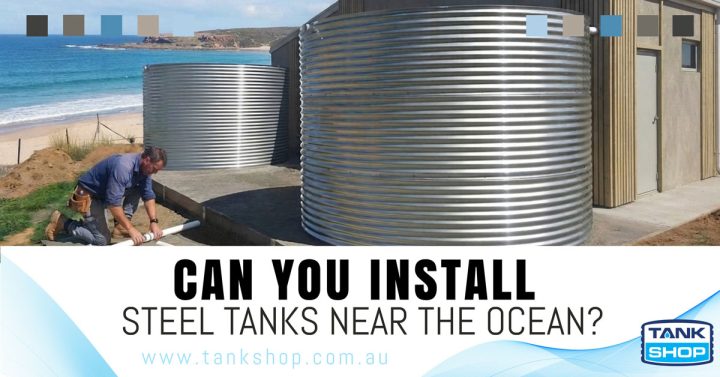
Living near the coast does not automatically rule out a steel rainwater tank. However, salty air can increase the risk of external corrosion, so the tank material, warranty conditions, location and ongoing care all need to be considered.
The best option will depend on how close your property is to the ocean, how exposed the tank will be to salt spray and which tank types are available in your area.
Can AQUAPLATE Steel Tanks Be Installed Near the Coast?
Yes. AQUAPLATE steel water tanks can be installed in coastal areas, including properties near the ocean.
AQUAPLATE is a BlueScope zinc-coated steel made specifically for water tanks. It has a food-grade polymer lining on the inside, while the exterior is supplied in a galvanised, COLORBOND or painted finish.
The important limitation is the corrosion warranty. BlueScope’s 20 Year AQUAPLATE Corrosion Warranty generally does not apply when the tank is installed within 500 metres of a saltwater marine environment. This does not mean an AQUAPLATE tank cannot be used there, but it does mean the additional risk from airborne salt is outside the standard corrosion warranty conditions.
That said, the tank manufacturer warranty may still apply to the tank’s construction and assembly, subject to its normal warranty terms. Kingspan generally supplies its AQUAPLATE tanks with a 20 Year Corrosion Warranty and 10 Year Construction Warranty (PDF).
Why Does Salt Air Affect Steel Tanks?
Ocean air carries fine salt particles that can settle on the tank’s exterior.
Rain will often wash exposed surfaces naturally. Problems are more likely where salt remains on:
- the tank lid and other horizontal surfaces
- sheltered sides that receive little rain
- areas underneath eaves, decks or tank covers
- fittings, seams and areas where moisture can remain
- sections exposed to direct sea spray.
Over time, a build-up of salt and moisture can increase the risk of corrosion.
BlueScope also notes that extra exterior protection may be appropriate in aggressive environments such as coastal or industrial sites.
Caring for an AQUAPLATE Tank Near the Ocean
A coastal AQUAPLATE tank should receive more care than one installed in a normal inland environment.
- Wash Off Salt Deposits – Regularly rinse the exterior with clean fresh water. As a practical guide, this may be needed every one to two months in highly exposed locations. Pay particular attention to the lid, upper edges, fittings and sheltered surfaces that are not naturally washed by rain.
- Avoid Completely Sheltering the Tank From Rain – A roof or enclosure can protect the tank from direct sea spray, but it can also prevent rain from washing accumulated salt from the exterior. Where the tank is sheltered, manual rinsing becomes especially important.
- Keep Water Away From the Tank Wall – The Overflow should discharge clear of the tank rather than allowing water to continually run down its wall. Leaves and debris should also be kept clear of the tank exterior and base. BlueScope advises avoiding dirt and debris around the bottom of the tank, keeping the leaf strainer clear and directing Overflow water away from the tank wall.
- Inspect the Tank Regularly – Check the exterior for: salt build-up, scratches or damage to painted surfaces, discolouration or early corrosion, water or debris collecting around the base, plumbing that is leaking onto the tank.
Addressing small issues early can help protect the tank and extend its service life.
Should You Choose a Marine Grade (316) Stainless Steel Tank Near the Ocean?
Where available, Marine Grade 316 Stainless Steel is generally the preferred steel tank material for properties close to the coast.
Grade 316 Stainless Steel contains molybdenum, which gives it greater resistance to salty coastal air and marine environments than standard Grade 304 Stainless Steel.
For our Stainless Steel Tanks range, the general selection guide is:
| Distance From a Marine Environment | Recommended Stainless Steel Grade |
|---|---|
| More than 10km | Grade 304 is normally suitable |
| 5km to 10km | Grade 316 is recommended for greater longevity, although Grade 304 may remain warranted |
| Within 5km | Marine Grade 316 is required for Manufacturer Warranty coverage |
These distances apply to the our Stainless Steel Tank Manufacturer’s warranty requirements. Both Grade 304 and Grade 316 Stainless Steel Tanks are offered with a 30 Year Manufacturer Warranty on the tank structure, subject to the Warranty Terms, correct grade selection and proper installation. Other brands and manufacturers may use different definitions or exclusions, so the warranty for the exact tank being considered should always be checked.
AQUAPLATE or Marine Grade Stainless Steel?
An AQUAPLATE tank may still be a practical and cost-effective option near the coast, particularly where:
- property is more than 500 metres from saltwater
- tank is not exposed to direct sea spray
- you are prepared to rinse and inspect it regularly
- a COLORBOND colour is required.
Marine Grade 316 Stainless Steel may be worth considering where:
- property is within 5km of the ocean
- salty air or sea spray is common
- tank will be installed in a highly exposed position
- stronger coastal corrosion resistance is a priority.
What About Poly Water Tanks?
Poly Water Tanks are another option for coastal properties. Polyethylene does not rust and is not affected by airborne salt in the same way as steel.
Poly Tanks may be worth comparing where Marine Grade Stainless Steel is unavailable or where the tank will be installed in a particularly exposed marine location.
The final choice may also depend on the required dimensions, aesthetics, what you plan to use the water for, delivery access, warranty terms and local availability.
Summary
Steel water tanks can be used near the ocean, but the correct material and regular care are important.
AQUAPLATE Steel Tanks can be installed in coastal locations, although BlueScope’s standard 20 Year Corrosion Warranty generally does not apply within 500m of a saltwater marine environment. Regular washing with fresh water can help reduce salt build-up and corrosion risk.
Where available, Marine Grade 316 Stainless Steel is generally the preferred steel option within 5km of the coast. A Poly Water Tank may also be worth considering in highly exposed locations.